Printer Friendly Page
Feature Article
Welcome to this latest edition of our newsletter.

First of all, we hope that you are well, enjoyed the nice summer weather and are upbeat about the country getting back to life as we knew it.


We start this month with a piece about the extraordinarily high levels of household savings that are currently on deposit. With interest rates at 0% and lower, now is the time to seriously look at alternatives. This is followed by a piece about the upcoming tax deadline, that sets out a few ways in which you can hopefully reduce your tax bill.


Finally we've provided our usual selection of articles that we found on the web that we think might be of interest to you.


Stay healthy and best wishes


Main Articles
Is it time to get your money off deposit?
 

Are we finally getting back to normal? It’s great to see people out and about again as the country eases itself out of lockdown. And for all of those retail businesses that were forced to close their doors, the early signs are good with the example of footfall on Grafton Street back to approx. 90% of the pre-pandemic levels.  


Are we finally getting back to normal? It’s great to see people out and about again as the country eases itself out of lockdown. And for all of those retail businesses that were forced to close their doors, the early signs are good with the example of footfall on Grafton Street back to approx. 90% of the pre-pandemic levels.  

This shouldn’t really be a big surprise to us though, as Irish household savings of €15bn during the first year of the pandemic from March 2020 to February 2021 were more than twice the normal savings rate. At the end of May this year, Irish household savings stood at a colossal figure of €131bn.

This money is sitting in bank accounts, effectively earning nothing and in some cases actually costing money for the privilege of leaving it there.

So what are savers to do?

Now just might be the time to re-examine the approach you’re taking with your hard-earned nest egg and maybe take a look at alternative investments for your long-term savings.


Deposit accounts have their place

There’s no doubt that deposits always merit some consideration when building a portfolio.

Certainly for amounts up to €100,000, they are pretty much risk free. They also are extremely liquid, as you can walk into a bank, and if your money is in a demand account you can withdraw it all on the spot. Deposits also make a lot of sense if your investment horizon is very short.


But never forget about diversification

However there are also issues with deposits that cannot be ignored. Some savers simply put all of their money in the bank and leave it there. This may be a mistake for a number of reasons. First of all, this approach may not suit your appetite for risk and it completely undermines the merits of diversification. Depending on your investment timeframe and risk appetite, you may be better served by also considering other asset classes in order to achieve your investment objectives. Yes, there is very often merit in having some of your money on deposit, however it often makes more sense to have your money split between deposits and other asset classes.


…Or the impact of inflation

With the forecasts for inflation in Ireland in 2021 ranging from 0.7% to 1.6%, inflation is the silent killer for deposit holders. It is often overlooked especially when interest rates are low.  However with interest rates at zero, any price inflation at all erodes the purchasing power of your savings. You’re effectively just becoming poorer.


It’s time for a plan

Nobody wants to  see the purchasing power of their savings dwindle over time. On the other hand, you might be nervous about other asset classes and the risks attaching to them - it’s time for a plan…

This starts with understanding your saving / investment objectives, clarifying your time horizons for your savings and getting clear insights of your attitude to taking risk and your capacity to take some more risk. Once these factors are clearer, then we can see if you’ll be better served by considering alternatives.


So why is there €131bn on deposit?

There’s no easy answer to this one. In many cases, it’s simply down to inertia. Some people think moving their money into alternative investment vehicles is probably too much hassle, but this inertia is costing them money. We also believe it is pretty misguided, as the process of getting investments in place is very straightforward, particularly now with the use of digital signatures etc.

For others, they just don’t want to take any risk. This may be because of underperforming investments in the past, or just wanting to know that you won’t lose money (except from inflation of course). Our belief is that this is fine if your time horizon is very short or your savings will enable you to achieve your goals in the future.

But gently challenging these assumptions can be illuminating. Our interest is in you having enough money to achieve your investment goals – what is the money actually for? And if your need to access the money is likely to be at least 5-10 years, maybe there’s a better way.


It certainly merits a conversation. We look forward to discussing whether having so much of your money on deposit is the right approach for you.

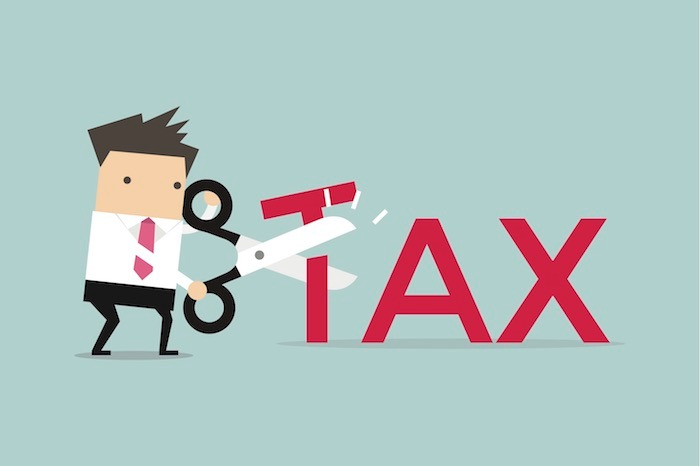
How will you reduce your tax bill?
 

Tax is a necessary evil. If we want to live in a country with access to public services, taxation is the system used to pay for these services. We can (and do!) argue and moan about the different levels of tax payable and whether they are levied fairly. But at the end of the day, the money to be used for public services has to be collected somewhere.


Tax is a necessary evil. If we want to live in a country with access to public services, taxation is the system used to pay for these services. We can (and do!) argue and moan about the different levels of tax payable and whether they are levied fairly. But at the end of the day, the money to be used for public services has to be collected somewhere.

While most people accept that tax must be collected, most people certainly do not want to pay more than their fair share. So as we approach the 31st October tax payment deadline for individuals (17th November if paid and filed electronically), we’ve set out 5 ways that can help you to reduce your tax burden either now or in the future. All of these are perfectly legitimate and are not considered aggressive tax practices – they are simply good tax housekeeping that is sometimes ignored.


Claim relief for your medical expenses

It still amazes us how many people let this one slip by… You can claim standard rate relief (20%) for all the medical expenses that you pay for – typically your own, your family’s and in some cases where you pay other people’s expenses. Most medical costs qualify and when you add up all those doctor visits, prescriptions, physio sessions, hospital consultations, x-rays etc., they can amount to a tidy sum. On top of this, some dental procedures such as crowns and gum treatments also qualify. Your claim is reduced by amounts claimed back from health insurers.

The process is so simple. You claim as part of your tax return and you can even go back and claim for the last four years. There might be the cost of a holiday coming back to you, to help the recovery from all your ails and to put Covid behind you...


Make a pension / AVC contribution

With this one, you need to make a pension contribution payment in order to gain the benefit, but there is a growing awareness of the need to provide for our own retirement needs. The state pension scheme is creaking at the seams and simply must change if it is to continue to be the foundation stone of retirement planning in Ireland. We all need to save for our futures, and pensions are usually the most effective way to do so.

Pension contributions attract a number of tax benefits,

  1. Your contributions qualify for marginal (higher) rate tax relief within certain limits
  2. Your pension fund grows free of all taxes
  3. You can take a portion of your fund tax-free at retirement, with other tax mitigating strategies being deployed in relation to the balance.


Tax relief on working from home

The upcoming tax bills are in respect of the 2020 tax year, which of course was hugely impacted by the covid pandemic. Some employers paid a working from home allowance for expenses incurred by employees who worked remotely. If not, you can make a claim for tax relief as part of your tax return and you will get money back from the taxes you paid. This refund will be based on a number of factors including,

  • How many days you actually worked from home
  • The cost of the expenses incurred
  • Revenue’s published rate for calculating the cost of running a home office


Annual gift exemption

Another one to save tax in the future. When you die and leave wealth behind you, this often results in tax liabilities for your estate beneficiaries. One of the ways to reduce this tax liability is to gift money to your future beneficiaries while you’re still alive. Any person can gift another person up to €3,000 p.a. without a tax liability. So for example, a couple in their later years could each gift €3,000 to each of their children, sons & daughters-in-law and their grandchildren etc. every year. They don’t even have to be directly related. This could significantly reduce the amount eventually to be inherited and could significantly reduce or remove any tax liability.


Be clever with financial protection

Some people unfortunately still think that all life assurance policies and illness benefits are all the same. They are not. Some can be used for specific purposes while attracting tax benefits – for example Section 72 policies that are used to pay an inheritance tax bill are exempt from inheritance tax themselves. Others such as certain life assurance policies and Permanent Health Insurance policies qualify for income tax relief on the premiums.

This area can be quite complex. Give us a call and we’ll simplify it all for you and find the most tax efficient route for you.


And then there’s the rest…

And still there are many more reliefs and exemptions available, some of which may apply to you. So make yourself aware of all of the reliefs available. Whether you’ve kids in college, are taking a training course or are commuting on public transport or cycling to work, there are potential tax saving opportunities out there for you. A little bit of research or a conversation with us just might help you to reduce that unwelcome tax burden that you are shouldering. 

Around the Web
The Problem is Not That You’ll Outlive Your Savings

Don't be the richest person in the graveyard.


Go Big, Then Stop

Never underestimate the impact of time and compound interest.


The 4% Rule: How Much Money Do You Need to Never Work Again?

How much money will you need?


You’re only as strong as your weakest link

Know your financial blindspot and develop strategies to overcome it.


How Much Should You Have Saved in Your 30s?

Similar to some of the above themes, money saved early has the greatest impact.  But don't give up hope...


The Biggest Ponzi Schemes in Modern History

How many of these might you have fallen for!