Printer Friendly Page
Feature Article
Welcome to this latest edition of our newsletter.

Welcome to this latest edition of our newsletter. First of all, we hope that you and all those dear to you are well. This last lockdown has been tough for many, but hopefully now the finish line is almost in sight. 


We start this month with an introduction to Evidence Based Investing, an investing style that is gaining a lot of attention and advocates around the globe. This is followed by our thoughts on the man recognised by many as the most successful investor in the world - Warren Buffett. We take a look at what we can learn from some of his most famous quotes. 


Finally we've provided our usual selection of articles that we found on the web that we think might be of interest to you


Stay healthy and best wishes


Main Articles
Three things to know about Evidence Based Investing
 

Evidence Based Investing (EBI) is gathering more and more supporters and advocates around the world, and as a result is starting to appear quite frequently in investment commentary and indeed the mainstream media. It is a term that you may or may not be familiar with, so we’re taking the opportunity to inform you of what you need to know about it.


Evidence Based Investing (EBI) is gathering more and more supporters and advocates around the world, and as a result is starting to appear quite frequently in investment commentary and indeed the mainstream media. It is a term that you may or may not be familiar with, so we’re taking the opportunity to inform you of what you need to know about it.


What is Evidence Based Investing?

EBI is an investing style grounded in academic research, the long-term observation of markets and how they actually work, while removing the need and the temptation for speculation and magic formulas in achieving investment success.

The EBI approach is based on the very best, peer reviewed empirical research, as opposed to the hunches and skill of active managers. It recognises that academic research tends to be independent in its nature, unlike much of the research produced in the fund management industry where commercial interests inevitably and often play a part in the direction of research findings. Academics simply don’t have anything to lose by concluding with findings that may be unfavourable for certain fund managers - they don’t have any “skin in the game”.  

 EBI also tends to be based on long-term data, which removes any skew in results from manipulating the dates in investment studies.  


So what does all that mean in reality for investment portfolios?

The reality is that a tiny number of actively managed funds actually beat the market over a long period of time, when costs are included. Active fund managers each have good years and bad years, but very few of them consistently beat the market over the long term. And of course, just because they were good last year does not mean they will be good this year.

As a result EBI has become closely associated with and even intertwined with passive investing, where low cost index funds are used with minimal interventions that add cost. The goal is to achieve as close as possible to a market return. But why is it so hard to beat the market?

  • First of all, markets are efficient. All of the relevant news and information is generally available immediately and to all investors. It is very difficult for a manager to get an edge through unique knowledge. Also the millions of transactions that are happening each day are immediately built into share prices, again making it very difficult for managers to spot price anomalies and to exclusively act on them.
  • For active managers to achieve greater reward, they need to take more risk, have superior skill, have a large slice of luck or a combination of all three. Yes they will have wins from time to time, but they will also suffer times of under-performance.
  • Active managers have to carry out extensive research themselves, in order to gain an edge.  This costs money. If they are successful, active managers will also expect very large bonuses too, adding more cost. This reduces the gain for investors.

Yes, active management is more fun – the big bets, the unexpected wins, sometimes the above-average riches and the opportunities to appear to have had incredible foresight. It looks good when you’re popping the champagne! Passive investing on the other hand is, well a bit boring – but boring is often good and Evidence Based Investing definitely advocates this as a positive factor. Boring equals predictable and unexciting, positive attributes when it comes to your money.

However it is also worth noting that EBI is not always 100% aligned with simply tracking a series of indexes. Again based on academic research, some evidence-based fund managers have added their own flavour to portfolios in order to achieve outperformance. An example of this is a “tilt” towards smaller-cap value stocks.


Human behaviour is crucial

Active fund managers are humans. Similar to investors, their decisions can be clouded by a range of emotions – greed, fear, elation, despair and a range of biases that might cloud their judgement. Evidence Based Investing removes all of these.

But that is not to ignore how important your own behaviours are when it comes to investing. Base your decisions on the evidence available, think long-term and don’t try and time the markets. Don’t follow the latest fads and shut out all of the noise around you. The evidence shows that these behaviours will significantly increase your chances of success.  


What can we learn from Warren Buffett?
 

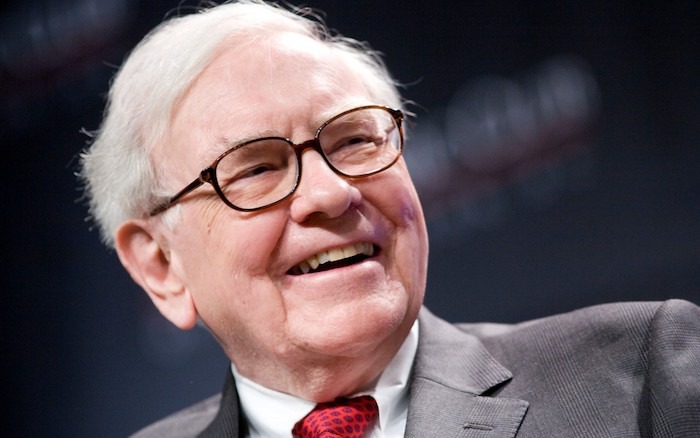
Where do you start with Warren Buffett? Widely recognised as the world’s shrewdest investor, the “Sage of Omaha” is now 90 years young and still doling out nuggets of advice to investors across the globe.


Where do you start with Warren Buffett? Widely recognised as the world’s shrewdest investor, the “Sage of Omaha” is now 90 years young and still doling out nuggets of advice to investors across the globe. Using his investment expertise, he had amassed a fortune of some $79 billion as of August 2020, making him the 4th wealthiest individual in the world.

Buffett is chairman and CEO of the Omaha (Nebraska) headquartered conglomerate, Berkshire Hathaway. His annual letter to shareholders is highly valued and their annual shareholder’s meeting has grown into an enormous event, attracting crowds some years in excess of 40,000 people! People want to hear what Buffett has to say.

The only infuriating factor in all of this is that he makes it all sound so simple… While of course it is not, he is guided by a series of principles that he sticks to and he regularly speaks of these through pithy and highly valued quotes. The challenge we faced in picking out some of his best quotes was reducing them to the number below. Here are seven of Warren Buffett’s best quotes.


1. “Rule No. 1 is never lose money. Rule No. 2 is never forget Rule No. 1.”

This is known as his golden rule and is actually a bit of an odd one. He is certainly not saying that one should invest only in instruments that can never fall, as this would rule out investing in the likes of shares. Instead he is saying that one should not invest in instruments that have real potential to be lower over a reasonable timeframe. He believes that rationality must sit at the heart of investing.

Losing in the short term is a part of winning over the long term. This never includes taking unnecessary risk such as investing in single or speculative assets that can lead to catastrophic losses. If you want to make money, you need to preserve your capital over any reasonable timeframe.


2. “Someone’s sitting in the shade today because someone planted a tree a long time ago.”

There is a theme of time running through many of Buffett’s best quotes, no more so than this one. A tree takes many years to grow and provide shade – when faced with an empty space in a garden or field, it can be tempting simply not to bother planting it and waiting for it to grow.

It’s the same with investing. Don’t expect immediate results. Smart investments require you to initially take action, they need a lot of time and you need to be patient. Don’t look for quick results – that’s speculating.


3. “If you aren’t willing to own a stock for 10 years, don’t even think about owning it for 10 minutes.”

In this quote, Buffett explains that the route to success for the average investor is not through short term bets on particular stocks, even though their growth may look like a dead cert. He believes that success for the average investor is achieved through long-term passive investing across an index, as opposed to trying to achieve quick wins through active management decisions.


4. “Price is what you pay, value is what you get.”

This is another of his famous quotes. In this he demonstrates his support for value investing as opposed to growth investing. Value investing is investing in businesses where the share price is deeply discounted to the value of the company, and you are effectively buying it on sale at a low price. Another quote that he also came out with about value investing was, “Whether we’re talking about stocks or socks, I like buying quality merchandise when it is marked down.” It makes sense – but you might be amazed at the number of people who want to buy stocks after they’ve had a really good run… and are now very expensive to buy.


5. “Risk comes from not knowing what you are doing.”

Warren Buffett places tremendous store in taking time out every day for reading and just thinking. While others are taking impulsive action and often just blowing a hole in their investments, he counsels the importance of educated and researched decisions. Taking your time and taking wise, careful decisions reduces your investment risk.


6. “I will tell you how to become rich. Close the doors. Be fearful when others are greedy. Be greedy when others are fearful.”

Another famous quote that if people in Ireland had listened to in the noughties, we would have saved ourselves a lot of pain. As Irish people bought second and third rental properties, and holiday villas in places they couldn’t find on a map, friends and family members followed them. Greed took over and a very expensive fall was the inevitable result. In hindsight, this was the time to be fearful and run away from such investments.

We see this in stock markets too. As markets climb high, novice investors get greedy and buy in when stocks are very expensive. Likewise after market crashes, we see uneducated, fearful investors sell up at a low price when this is the best time to be greedy and buy in.


7. “No matter how great the talent or efforts, some things just take time. You can’t produce a baby in one month by getting nine women pregnant.”

Back to the theme of time – there are some things that just cannot be rushed! Is there any better example than producing a baby? Buffett often reminds us that investments are similar, they take time to grow. Looking for quick results often ends up as an expensive mistake.   


Warren Buffett teaches us a lot of valuable and common sense lessons about investing. He also teaches us about linkages between investments, money and life in general. We’ll leave you with a final, refreshing thought from him about being a wealthy man and the potential impact this could have on his children – there’s a lesson in here for all of us.


"I’ll give my kids enough money so that they would feel they could do anything, but not so much that they could do nothing."

 

Around the Web
12 Things I Remind Myself When Markets Go Crazy

A few points to remind yourself when markets are volatile.


5 Grownup Things To Do Right Now

We're not so sure about a prenup, but here are 5 important actions to take.


The Top Sources Americans Use to Make Investment Decisions (2001-2019)

The internet is great for research purposes, but we believe personalised, professional advice will always win out with serious investors. 


Pensions timebomb waiting to go off unless we take action now

There is a crisis coming - a sharp increase in elderly populations in Ireland in the coming years.


Never Assume

Here are 35 assumptions we shouldn’t make!


Public sector pensions make up quarter of pension money owed to households

Public sector pensions are a key element of the ticking pensions timebomb too.